
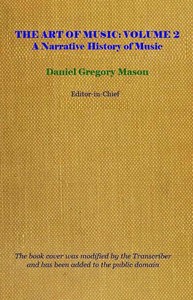
The art of music, Vol. 02 (of 14) : Classicism and Romanticism by Mason et al.
Let's be honest, the title 'Classicism and Romanticism' might sound a bit intimidating, like a college textbook. But this volume is actually a surprisingly lively guide to one of the biggest revolutions in music history.
The Story
This isn't a book with characters and a plot in the usual sense. Instead, the 'story' is the dramatic transformation of Western music itself. The book starts in the mid-1700s, in the world of Classicism. Here, music was governed by ideals of clarity, symmetry, and emotional restraint. Composers like Haydn and the young Mozart were masters of form—the sonata, the symphony—creating works that felt balanced and logical. Music often served social functions in palaces and courts.
Then, the scene changes. The book charts the rise of Romanticism, a movement that flipped everything on its head. Starting with late Beethoven and soaring through composers like Schubert, Berlioz, and Chopin, music became a vessel for intense personal expression. The goal was no longer just beauty, but truth, awe, and deep feeling. Composers drew inspiration from folklore, nature, and literature. The orchestra grew bigger and louder to match these grand new ambitions. The book follows this thrilling journey, showing how the very purpose of music was rewritten.
Why You Should Read It
What I love about this book is how it makes you listen differently. After reading it, I went back and listened to a Mozart symphony and then a piece by Berlioz. The difference wasn't just in the notes; I could feel the shift in intent. The book gives you the context to hear the rebellion in the music. It explains why a Romantic composer might use a haunting melody to tell a ghost story, or why the piano became the ultimate instrument for private emotion. It ties the music directly to the changes happening in society—revolutions, the rise of the individual artist, the fascination with the sublime. You stop just hearing 'classical music' and start hearing distinct voices from distinct moments in time.
Final Verdict
This book is perfect for curious music lovers who go beyond playlists. If you enjoy classical music but want to understand the 'why' behind the 'what,' this is a fantastic place to start. It's also great for history or art fans who want to see how different creative fields influenced each other. The writing is clear and avoids getting bogged down in overly technical jargon. Think of it as a friendly and insightful documentary in book form. You'll finish it with a whole new set of ears.
This text is dedicated to the public domain. Access is open to everyone around the world.
John Anderson
8 months agoThe balance between academic rigor and readability is perfect.
Christopher Martin
4 months agoThe clarity of the introduction set high expectations, and the insights into future trends are particularly thought-provoking. Finally, a source that prioritizes accuracy over hype.
Joseph Williams
1 year agoAs a long-time follower of this subject matter, the argument presented in the middle section is particularly compelling. A mandatory read for anyone in this industry.
Patricia Wright
1 year agoTo be perfectly clear, the narrative structure is incredibly compelling. Exceeded all my expectations.



Charles Smith
1 year agoThe layout of the digital version made it easy to start immediately, the logic behind each conclusion is easy to follow and verify. Truly a masterpiece of digital educational material.