
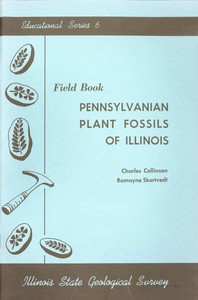
Field Book: Pennsylvanian Plant Fossils of Illinois by Collinson and Skartvedt
Let's be clear from the start: this isn't a novel. There's no villain or love story. But the story it tells is one of the most epic on Earth. Field Book: Pennsylvanian Plant Fossils of Illinois is the result of decades of work by Charles Collinson and Romayne Skartvedt. They dedicated their careers to cataloging the ancient plant life preserved in the coal-rich rocks of Illinois.
The Story
The 'plot' is the journey of discovery. Millions of years ago, during the Pennsylvanian period, Illinois wasn't a prairie state. It was part of a vast, humid, tropical swamp, kind of like the Amazon but stranger. Giant club mosses called scale trees towered overhead, and ferns the size of small trees formed dense thickets. When these plants died, they fell into the oxygen-poor water, didn't fully decay, and were eventually squashed and preserved as coal and fossils. Collinson and Skartvedt's book is a field guide to these fossilized remains. It systematically shows you how to identify the different species—the detailed veins of a fern frond, the diamond-shaped pattern on bark, the unique shape of a seed—giving names and context to the silent stones.
Why You Should Read It
I love this book because it makes the invisible visible. It’s a key to a hidden layer of the world. Reading it, I don't just see a funny-shaped rock; I see a specific plant that was alive before dinosaurs walked the Earth. Skartvedt's work, in particular, feels personal and meticulous. You get the sense of someone patiently putting together a massive, million-piece puzzle. The book hands you their hard-won knowledge. It transforms a walk in a creek bed or a glance at a roadside cut from a casual stroll into genuine exploration. You start asking questions: What was this place like? How did it change? It connects you directly to deep time in a way that's tangible and thrilling.
Final Verdict
This book is a specialized tool, but its magic is for anyone with curiosity. It's perfect for amateur rockhounds, hikers with a wondering mind, or anyone in Illinois or the Midwest who wants to know the profound history of their landscape. It's also a beautiful artifact of dedicated science. It’s not a casual bedtime read, but as a reference to keep in your car or backpack, it’s unparalleled. Open it, and you're not just reading about history—you're learning how to touch it.
Legal analysis indicates this work is in the public domain. Preserving history for future generations.
Ashley White
1 year agoBefore I started my latest project, I read this and the attention to detail regarding the core terminology is flawless. I feel much more confident in my knowledge after finishing this.
Robert Garcia
1 month agoHaving followed this topic for years, I can say that the logic behind each conclusion is easy to follow and verify. If you want to master this topic, start right here.
Steven Hernandez
1 year agoTo be perfectly clear, it creates a vivid world that you simply do not want to leave. Definitely a 5-star read.
Joshua Lewis
1 year agoBased on the summary, I decided to read it and it provides a comprehensive overview perfect for everyone. Exceeded all my expectations.







Mary Gonzalez
1 year agoI was particularly interested in the case studies mentioned here, the case studies and practical examples provided add immense value. A mandatory read for anyone in this industry.