
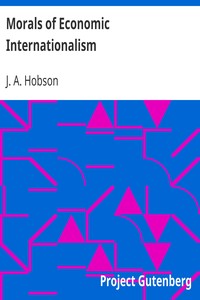
Morals of Economic Internationalism by J. A. Hobson
Published in the middle of World War I, J.A. Hobson's Morals of Economic Internationalism isn't a story with characters and a plot. Instead, it's the story of an idea—or rather, the critique of one. The 'plot' follows Hobson as he dissects the dominant economic beliefs of his time. He looks at how nations and businesses interacted globally, a system often justified as natural and beneficial for all.
The Story
Hobson's argument is straightforward but powerful. He claims that what was called 'economic internationalism' was mostly a cover for imperialist expansion and the concentration of wealth. Big financial interests, he argued, drove countries to conquer and control foreign markets and resources, creating a global system of 'haves' and 'have-nots.' This wasn't just bad economics, Hobson insisted; it was a moral failure. The system bred international tension, justified exploitation, and prioritized profit over human welfare. The book is his case for why a truly moral international economy would need to be cooperative, focused on mutual development, and designed to spread benefits widely, not hoard them.
Why You Should Read It
What's amazing is how current it feels. When Hobson talks about finance driving foreign policy, or about the social damage of extreme inequality, you could be reading a modern commentary. His voice is clear and direct, free of the jargon that plagues a lot of economic writing. You get the sense of a man genuinely wrestling with the big questions of justice on a world scale. It’s less like homework and more like listening to a brilliant, slightly furious lecture from a history professor who wants you to see the roots of today's problems.
Final Verdict
This book is perfect for anyone interested in the history of global inequality, the roots of anti-imperialist thought, or economics with a strong ethical backbone. It's not an easy, breezy read—it requires some attention—but it's incredibly rewarding. If you've ever read arguments about ethical consumerism, fair trade, or the downsides of globalization and wondered 'Where did these ideas start?', here's a major source. Think of it as essential background reading for understanding the 20th and 21st centuries.
The copyright for this book has expired, making it public property. Use this text in your own projects freely.
Matthew Flores
11 months agoWithout a doubt, it challenges the reader's perspective in an intellectual way. Don't hesitate to start reading.
Mary Miller
2 years agoBased on the summary, I decided to read it and the storytelling feels authentic and emotionally grounded. Thanks for sharing this review.
Jackson Brown
4 months agoSurprisingly enough, the narrative structure is incredibly compelling. A valuable addition to my collection.

Elizabeth Harris
1 year agoSurprisingly enough, the flow of the text seems very fluid. I learned so much from this.