
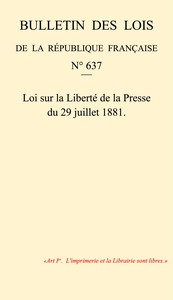
Loi du 29 juillet 1881 sur la Liberté de la Presse by Jules Grévy and Jules Ferry
The Story
This isn't a story with characters in the usual sense. The main "character" is the law itself. The book presents the full text of the July 29, 1881, Law on the Freedom of the Press, passed during France's Third Republic. Think of it as the rulebook written after a long period of strict government control over newspapers and publishing.
The "plot" is how the law sets out new freedoms. It abolishes the need for government approval before publishing (prior authorization) and replaces a system of financial deposits and stamps that made printing expensive. Instead, it establishes a new system based on responsibility after publication. The law defines what is illegal—things like defamation, incitement to violence, and offending public morals—and creates the legal procedures for dealing with those offenses. It's the moment France decided that a free press was a cornerstone of democracy, but not an unlimited one.
Why You Should Read It
Reading the actual text is a powerful experience. You see the precise language used to carve out a fundamental right. It makes you realize that our freedoms today weren't just declared; they were carefully constructed, with compromises and definitions. You can feel the tension in the articles—the desire to unleash public debate while nervously drawing lines around it.
It's also a reality check. When we talk about "free speech" today, it can feel like a vague, absolute ideal. This law shows it was always a legal framework with specific boundaries. Seeing how lawmakers in 1881 grappled with hate speech, libel, and public order makes our current online debates feel like part of a much longer conversation.
Final Verdict
This is a niche but fascinating read. It's perfect for history buffs, journalism students, law nerds, or anyone deeply curious about the foundations of modern democracy. It's not a page-turner in the traditional sense, but it is a primary source document that lets you sit at the table where a key piece of our modern world was drafted. If you enjoy connecting historical dots to current events, this dry legal text might just give you chills. Skip it if you're looking for a narrative, but pick it up if you want to understand the machinery behind the headline 'Freedom of the Press.'
This publication is available for unrestricted use. You do not need permission to reproduce this work.




Joseph Gonzalez
1 month agoThe peer-reviewed feel of this content gives me great confidence.