
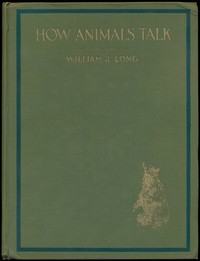
How animals talk : And other pleasant studies of birds and beast by Long
Forget everything you think you know about nature documentaries with dramatic narration. William J. Long's How Animals Talk is something else entirely. Published in 1919, it's a series of gentle, firsthand observations from a man who preferred sitting silently in the woods to lecturing in a classroom.
The Story
There isn't a single plot. Instead, Long takes us on a series of walks through the forests and along the streams of early 20th-century America. Each chapter focuses on a different animal or bird—a mother bear teaching her cubs, a wolf on the hunt, a family of beavers building a dam, or birds communicating across a meadow. He describes what he saw and heard in vivid detail, then shares his interpretations. He watches a wounded moose carefully hide its trail, sees otters apparently playing games for fun, and listens to the complex calls of birds that seem to convey specific warnings or information. The 'story' is the unfolding mystery of their daily lives, pieced together through patience and respect.
Why You Should Read It
This book is a breath of fresh air. In an age obsessed with data and hard proof, Long's method is beautifully simple: watch, learn, and empathize. His writing makes you feel the crisp morning air and the tension of watching a predator stalk its prey. What I love most is his core belief: that animals possess a kind of 'natural wisdom' and intelligence that we often miss because we're looking for human-like signs. He gives them credit for thought, emotion, and even humor. Reading this, you start to see the crow on your fence not as a random bird, but as an individual with a life. It’s a perspective that feels surprisingly modern in its call for empathy, even if his methods wouldn't pass today's scientific rigor.
Final Verdict
This book is perfect for anyone who feels a sense of wonder when they see an animal in the wild. It's for the hiker, the backyard birdwatcher, the person who slows down to watch a spider build a web. If you enjoy the thoughtful, narrative style of writers like John Muir or the curious spirit of modern naturalists like Sy Montgomery, you'll find a kindred soul in Long. Just be prepared to look out your window a little more often. It might make you want to sit very still and just listen.
This publication is available for unrestricted use. Distribute this work to help spread literacy.
Oliver Johnson
5 months agoHonestly, it manages to explain difficult concepts in plain English. Highly recommended.




Kimberly Wilson
10 months agoThe research depth is palpable from the very first chapter.