
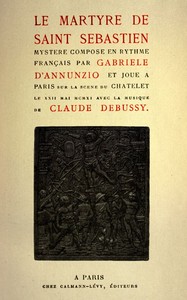
Le Martyre de Saint Sébastien by Gabriele D'Annunzio
Let's be clear from the start: this isn't a book you curl up with for a straightforward plot. Le Martyre de Saint Sébastien is a 'mystery play' or theatrical text, originally meant to be a lavish, multi-sensory stage experience with music, dance, and drama. Reading it is like having the libretto to a very intense, silent film-era epic.
The Story
The play follows the final hours of Sebastian, a captain in the Roman Praetorian Guard who is secretly a Christian. When his faith is discovered by the Emperor Diocletian, Sebastian is given a choice: renounce his god or die. He chooses martyrdom. The soldiers tie him to a tree and shoot him full of arrows. But here's where D'Annunzio's version gets strange. Sebastian doesn't die immediately. Instead, he enters a visionary state. He's visited by celestial voices and, most strikingly, by two mystical and seductive sorceress figures. The story becomes an internal struggle, a psychedelic journey where Sebastian's spirit wrestles with divine ecstasy and earthly beauty before finally achieving his martyrdom.
Why You Should Read It
You read this for the atmosphere, not the action. D'Annunzio's language is incredibly dense and poetic. Every line is dripping with imagery—light, jewels, flowers, music, and pain are all described in overwhelming detail. The fascination for me was seeing how the author, known for his decadent and controversial life, projects his own obsessions with art, beauty, and suffering onto a religious figure. Sebastian becomes less a pious saint and more of a super-sensitive artist-hero, embracing a painful, beautiful destiny. It's a bizarre and hypnotic mix of Catholic mysticism and flamboyant aestheticism.
Final Verdict
This is a niche pick, but a rewarding one for the right reader. It's perfect for lovers of symbolism, poetry, and late 19th-century decadent art. If you enjoy the works of Oscar Wilde, the paintings of the Pre-Raphaelites, or the music of Debussy (who composed the score), you'll find a lot to unpack here. It's also fascinating for anyone interested in how historical myths get reinterpreted through a highly personal, artistic lens. Approach it like you would a long, intricate poem: slowly, and ready to be swept up in its strange, radiant, and sometimes overwhelming vision.
You are viewing a work that belongs to the global public domain. Knowledge should be free and accessible.
George Nguyen
2 months agoFive stars!
Daniel Ramirez
1 year agoWow.
Christopher White
2 years agoHonestly, the narrative structure is incredibly compelling. I will read more from this author.





Patricia Thomas
1 month agoWhile browsing through various academic sources, the structural organization allows for quick referencing of key points. A trustworthy resource that I'll keep in my digital library.